
INTELLIGENCE BRIEFS #4
Curated stuff, all tangential

On Monday of this week, President Emmanuel Macron of France appointed a new Prime Minister to run the government. He lasted all of 14 hours:
French President Emmanuel Macron is running out of wiggle room. The abrupt resignation of his prime minister Monday — Macron’s fourth in more than a year of almost ceaseless political upheaval — puts the French leader in a bind.
None of the options now look appealing for Macron, from his perspective at least. And for France, the road ahead promises more of the political uncertainty that is eroding investor confidence in the European Union’s second-largest economy and is frustrating efforts to rein in France’s damaging state deficit and debts.
At the hear of the problem, France is heading to bankruptcy right quick unless government spending can be dramatically cut back. Macron’s successive Prime Minister’s have tried to get a budget through parliament that includes budget cuts of 44 billion euros.
Parliament’s answer is a firm and unyielding ‘non’.
It’s crisis point now. Once French geoeconomist on social media does his best to explain the situation:
Something COMPLETELY SILLY is happening in France
. The prime minister, who resigned yesterday, remains in office to form a new government and negotiate the conditions of his own disappearance.
The president, who accepted his resignation, asked him not to leave before finding someone else willing to commit political suicide in his place.
France is currently governed by a man who has no government, advised by ministers who no longer exist, and opposed by parties that cannot decide if they are against him or against each other.
Parliament continues to debate laws that nobody will vote on because everyone is busy speculating who will get the next useless portfolio in a cabinet that may never be formed.
On the left, the Socialists demand unity under their leadership, the Greens demand unity under ecology, and far-left La France Insoumise demands unity under Jean-Luc Mélenchon, which is to say: under no one but Jean-Luc Mélenchon. They hold secret meetings to coordinate their disagreements.
The communists support everyone except those who support them, while the far left calls for revolution. On the right, conservative Les Républicains declare themselves the responsible adults in the room while refusing to participate in any form of government. They issue solemn declarations about stability.
Renaissance, the presidential party, has become a ghost ship drifting between factions. One group still believes in Macron, another believes in Macronism without Macron, and a third believes that believing in anything at all is a dangerous precedent.
The president himself spends his time inviting leaders to the Élysée to ask them not for support, but for proof that they still exist. His former prime ministers—Philippe, Attal, and now Lecornu—form a small brotherhood of survivors who meet secretly to calculate how many governments they can still destroy before lunch.
Meanwhile, far-right Rassemblement National celebrates its “moral victory” in every election it does not win, insisting that France is finally waking up—although nobody agrees on what form.
The financial markets panic because they understand everything too well, while the French public no longer cares to understand anything at all. The journalists, exhausted, have stopped explaining and now merely describe. Every political analyst who tries to make sense of the situation ends up producing theology.
And so, the Republic continues: a masterpiece of confusion, irony, and the sheer will of civil servants who refuse to acknowledge that nothing makes sense anymore. The president governs a void; the opposition governs itself; and the people, with admirable stoicism, prepare for the next election that will certainly aggravate the problem.
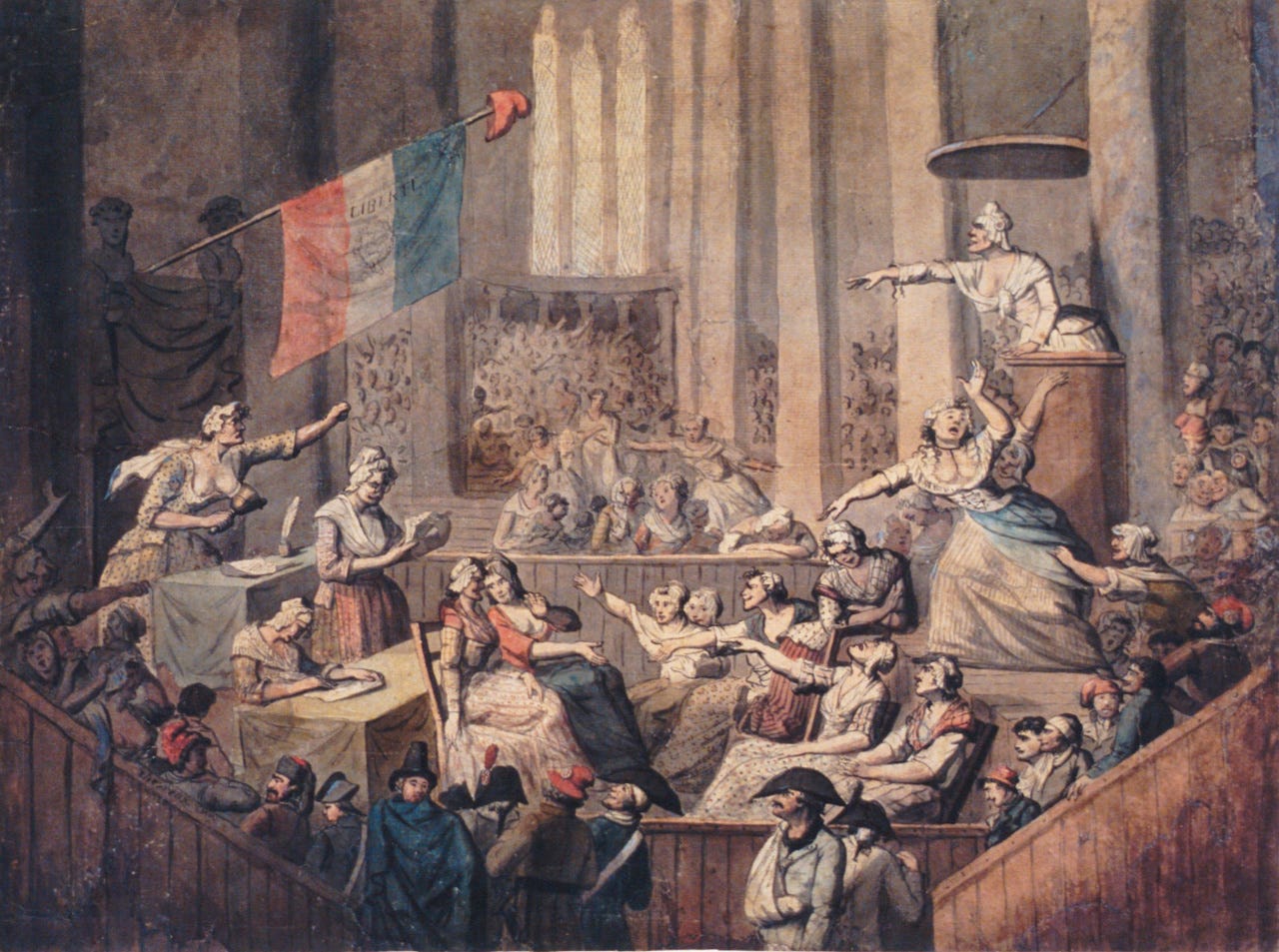
Not to be outdone, the Germans are beginning to face up their own looming fiscal crisis:
According to the German Council of Economic Experts, the retirement age should be raise to 73 to keep the country’s social security system from collapsing.
It suggested a gradual rise in the retirement age from 67 to 73 by 2060.
This is to counter the stagnant economy, which has low productivity growth, deindustrialisation and structural demographic problems Germany is struggling with, meaning people have to work longer to produce the same economic output, the report states.
Germany: the economic ‘powerhouse’ of Europe. Maybe not for much longer. ‘Deindustrialisation’ - forced on them by the USA - will lead to a significant decline in their living standards and, for sure, the end of the famously generous welfare state.
These things are related, of course and the dots are joined together in this sobering, essay from German sociologist Andreas Rechwitz:
From the Enlightenment onward, progress functioned as the secular creed of the West. For centuries our societies were defined by the conviction that the future must outshine the present, just as the present surpassed the past. Such optimistic faith was not merely cultural or institutional but all-encompassing: Everything was going to get better. In this way of thinking, there was no room for loss.
Today, that civilizational belief is under profound threat. Loss has become a pervasive condition of life in Europe and America. It shapes the collective horizon more insistently than at any time since 1945, spilling into the mainstream of political, intellectual and everyday life. The question is no longer whether loss can be avoided but whether societies whose imagination is bound to “better” and “more” can learn to endure “less” and “worse.” How that question is answered will shape the trajectory of the 21st century.
Basically, it’s the end of the good times for the West. Rechwitz sets out some of the issues well but, sadly, descends into word-salad-psychobabble for his conclusion.
Still, worth reading if you have the time.